Tomate (Stabtomate)

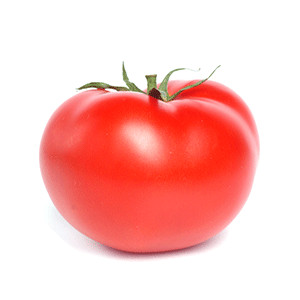
Tomate (Stabtomate)
Solanum lycopersicum
Pflanzenfamilie
Nachtschattengewächse (Solanaceae)
Auch bekannt als
Tomate, Paradeiser, Paradeisapfel, Paradiesapfel
Saisonübersicht
Voranzucht
Pflanzung
Ernte
J
F
M
A
M
J
J
A
S
O
N
D
Details


Lichtbedarf
Sonnig

Wasserbedarf
Feucht

Boden
Leicht (sandig)

Nährstoffbedarf
Hoch

Lichtkeimer

Pflanzabstand
50 cm

Reihenabstand
100 cm

Saattiefe
0.5 cm
Anleitungen
Die Saison für diese Pflanze ist vorüber. Die folgenden Anleitungen sind für die nächste Saison.
Anfang April

Vorziehen
Mitte April

pikieren
Mitte Juni

Abhärten
Beschreibung
Die Stabtomate ist ein krautiges, hochwachsendes, sonnenhungriges und frostempfindliches Nachtschattengewächs. Die sehr große Vielfalt (über 15.000 Sorten) an Formen, Farben und Größen lädt zum Ausprobieren ein. Dabei sollten spezifische Anbau- und Pflegehinweise einzelner Sorten beachtet werden.
Herkunft:
Mittel- und Südamerika
Anbautipps
Tomaten haben einen hohen Licht-, Wärme-, Wasser- und Nährstoffbedarf. Die Anzucht erfolgt aus Samen ab März auf der Fensterbank. Die Setzlinge solltest du tief einpflanzen, bis zum ersten Blattansatz, so wird das Wurzelwerk durch zusätzliche Seitenwurzeln vergrößert. Anders als bei den meisten anderen Kulturen solltest du Tomaten immer an der gleichen Stelle pflanzen. Außerdem brauchen die Pflanzen Holz-/Welldrahtstäbe oder ein Gitter, an dem du sie regelmäßig anbindest. Nur so können sie das Gewicht der Früchte tragen. Die Seitentriebe, die sich in den Blattachseln bilden, solltest du regelmäßig ausbrechen. Denn sie tragen keine Früchte und nehmen der Pflanze die Energie, um sich auf die Bildung vieler Früchte zu konzentrieren. Eine Untersaat mit niedrig wachsenden Pflanzen ist gut möglich - Tomaten gießen: Je nachdem, ob du Tomaten vorziehst oder direkt säst, und je nach Standort und Sorte, musst du deine Tomatenpflanzen unterschiedlich oft gießen. Tomaten können sehr tiefe Wurzeln ausbilden, die sich dann sogar Wasser aus dem Grundwasser ziehen können. Dann brauchst du sie kaum oder gar nicht zu gießen. Achte auf die Blätter, hängen sie schlaff herunter solltest du deine Tomatenpflanzen bewässern. Besonders im Topf, Hochbeet und Hügelbeet trocknet die Erde schneller aus, sodass du dort öfters bewässern musst.

Gute Nachbarn
Basilikum
Blattkohl (Grünkohl)
Blattkohl (Palmkohl)
Blumenkohl
Bohne (Ackerbohne)
Bohne (Buschbohne)
Bohne (Stangenbohne)
Brokkoli
Chili
Chinakohl
Kapuzinerkresse
Knoblauch
Kohlrabi
Kopfkohl (Weißkohl)
Kopfkohl (Wirsing)
Kresse
Mais
Minze
Mizuna
Möhren
Oregano
Pak Choi
Paprika
Petersilie
Radieschen
Rettich
Ringelblume
Rosenkohl
Salat (Gartensalat)
Salat (Radicchio)
Schnittlauch
Sellerie (Knollensellerie)
Sellerie (Stangensellerie)
Sojabohne
Spargel
Spinat (Sommer)
Wurzelpetersilie
Zwiebel
Zwiebel (Frühlingszwiebel)


Krankheiten
Grauschimmel
Dürrfleckenkrankheit

Schädlinge
Thripse
Blattläuse
Spinnmilben
Weiße Fliege