Fennel

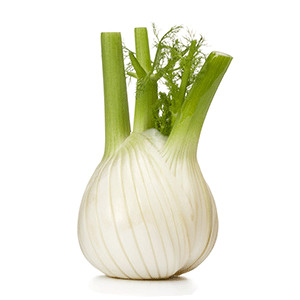
Fennel
Foeniculum vulgare
Plant family
Umbellifers (Apiaceae)
Season Overview
Propagating
Planting
Harvest
J
F
M
A
M
J
J
A
S
O
N
D
Details


Light requirement
Sunny

Water requirement
Wet

Soil
Light (sandy)

Nutrient requirement
Medium

Plant distance
20 cm

Row spacing
30 cm

Seeding depth
2 cm
Instructions
The season for this plant is over. The following instructions are for the next season.
Mid of February

Propagating
Mid of March

Transplanting
Mid of March

Harden
Description
Fennel is a perennial herb of the umbellifer family that grows up to 2 m high. Fennel seeds, fennel leaves and the fennel bulb are used, each with the characteristic sweet scent caused by essential oils. A distinction is made between spicy fennel, bitter fennel and tuberous fennel. The latter forms a whitish storage bulb near the ground, which, if not harvested, ensures the new sprouting of the fennel plant in the following year.
Origin:
Mediterranean area
Growing tips
Fennel is a dark germinator that requires an even supply of water and nutrients. It can be sown directly or grown in seed trays. Spice fennel is sown earlier (early April to early May) than vegetable fennel (mid-June to mid-July). Laying leaves around the bulb protects it from the cold in the fall. Tuber fennel can be harvested when the bulb is about the size of a fist, while fennel can be harvested when the fruitlets turn brown.

Companion Plants

Antagonistic Plants
Anise
Aubergine / Eggplant
Bean (Broad bean / Faba bean / Field bean)
Bean (Dwarf bean)
Bean (Runner bean)
Brussels sprouts
Cabbage (Cabbage)
Cabbage (Savoy cabbage)
Caraway / Meridian fennel / Persian cumin
Chili
Collard greens (Kale)
Collard greens (Tuscan kale / Dinosaur kale / Palm tree kale)
Coriander / Cilantro
Cress
Dill
Jerusalem artichoke / Topinambur
Kohlrabi / German turnip / Turnip cabbage
Lovage
Marjoram
Napa cabbage / Chinese cabbage
Nasturtium
Pak Choi
Parsley
Parsnip
Pepper / Paprika
Root parsley
Diseases
No diseases
Pests
Leatherbug (Blind Bug)
Land snails