Roter Rhabarber

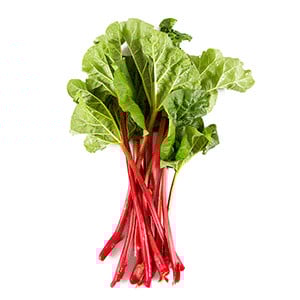
Variety
Roter Rhabarber
Approved Data
created by steffen a. at 02.04.2021
Features
Color
rot
Season Overview
Propagating
Planting
Harvest
J
F
M
A
M
J
J
A
S
O
N
D
1ST YEAR
FOLLOWING YEARS
Description
Very easy cultivation. Red-stemmed, large. Sowing in spring or autumn. Perennial. Germination after 6-10 days at 10-15 °C.
Non hybrid
Frostproof
Growing tips
Place the seeds in pots with nutrient-rich sowing soil or swelling tablets and cover lightly with soil. Keep moist. Prick out after germination. Autumn sowing possible in September. Rhubarb needs a lot of nutrients, so fertilize with compost and water regularly, avoid waterlogging. Rhubarb requires a little patience, success is sometimes a little slow, but it's worth it! Harvest from the 2nd year onwards. Pull the rhubarb out of the ground (do not cut, otherwise rot will form). Do not harvest all the stalks, but leave some on the plant. Traditionally, the harvest period ends on June 24 - the plant needs the rest of the year to recover.
Details


Light requirement
Semi-shaded

Water requirement
Moist

Soil
Light (sandy)

Nutrient requirement
High

Plant distance
100 cm

Row spacing
100 cm

Seeding depth
2 cm

Companion Plants
Bean (Broad bean / Faba bean / Field bean)
Bean (Dwarf bean)
Bean (Runner bean)
Broccoli
Brussels sprouts
Cabbage (Cabbage)
Cabbage (Savoy cabbage)
Cauliflower
Collard greens (Kale)
Collard greens (Tuscan kale / Dinosaur kale / Palm tree kale)
Common marigold
Kohlrabi / German turnip / Turnip cabbage
Lettuce (Lamb's lettuce)
Lettuce (Lettuce)
Napa cabbage / Chinese cabbage
Pak Choi
Pea
Spinach (Summer)

Antagonistic Plants

Diseases
Angular leaf spot of cucumber
Black spot of roses
Red spot disease
Pests
Root knot nematodes