Parsnip

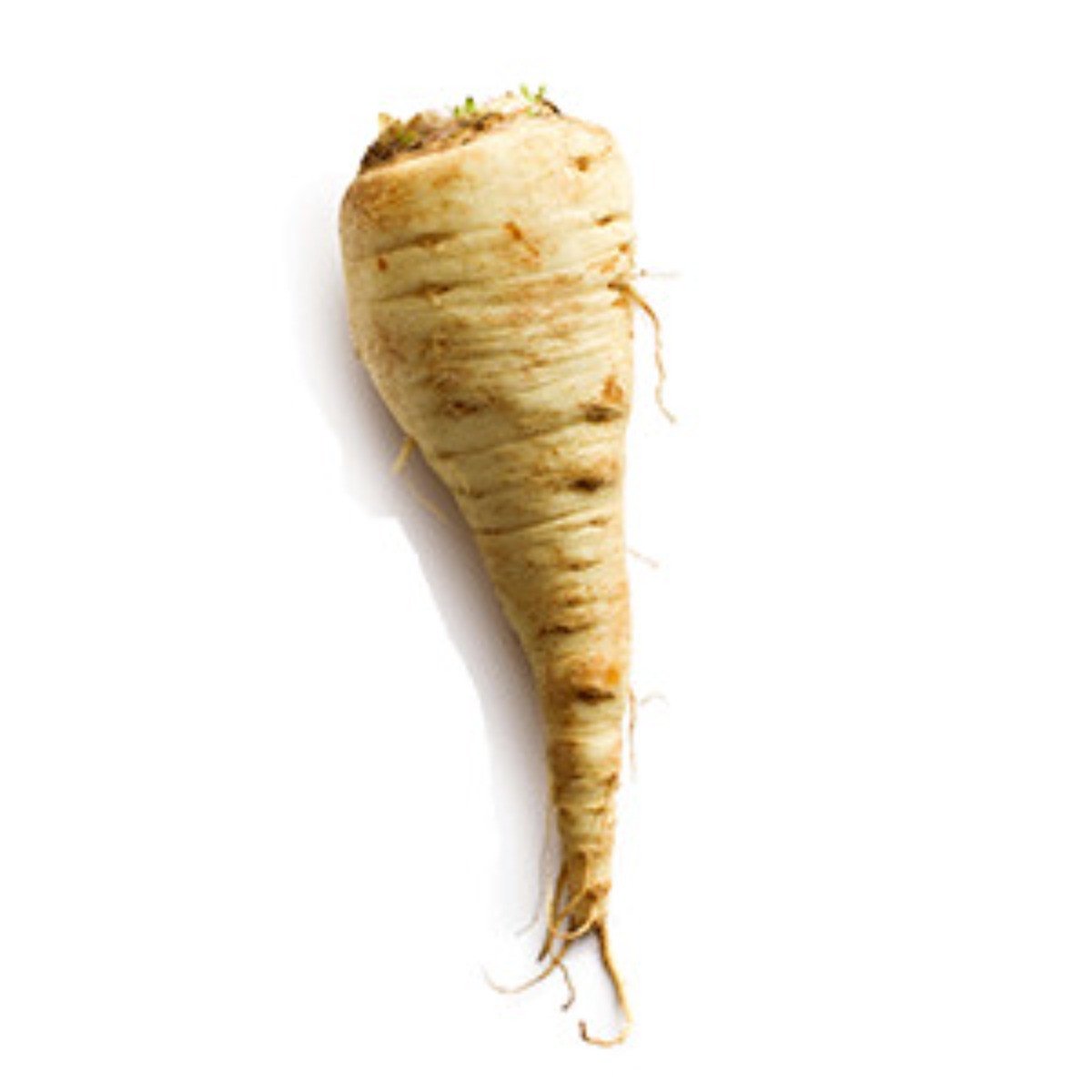
Parsnip
Pastinaca sativa
Plant family
Umbellifers (Apiaceae)
Season Overview
Sowing
Harvest
J
F
M
A
M
J
J
A
S
O
N
D
Details


Light requirement
Semi-shaded

Water requirement
Wet

Soil
Light (sandy)
Nutrient requirement
Medium

Plant distance
15 cm

Row spacing
30 cm

Seeding depth
1 cm
Instructions
Mid of September

Harvesting
Description
Like the carrot, the parsnip is a biennial crop from the umbelliferae family. However, when grown as a vegetable, it is harvested in the first year. This is because in the second year it flowers and the root is then no longer edible. The turnips are yellowish-white and take a long time to grow to harvest maturity. Parsnip is a very old vegetable, which was almost forgotten. Therefore, there are only a few varieties.
Origin:
Eastern Mediterranean
Growing tips
In cool temperatures, it is advisable to cover the plants with fleece. Regular weed control is necessary for young plants. In summer, the plants need a good supply of water as they develop lush foliage. Before harvesting, it is advisable to loosen the soil to make it easier to pull the roots out of the ground. Covering the soil with straw or fleece makes harvesting easier, as this prevents the soil from freezing.

Companion Plants

Antagonistic Plants
Diseases
Downy mildew
Angular leaf spot of cucumber
Black spot of roses
Red spot disease
Pests
Land snails
Voles