Sage

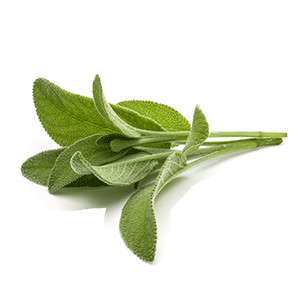
Sage
Salvia officinalis
Pflanzenfamilie
Mint family (Lamiaceae)
Saisonübersicht
Voranzucht
Pflanzung
Ernte
Ernte
J
F
M
A
M
J
J
A
S
O
N
D
1. JAHR
FOLGEJAHRE
Details


Lichtbedarf
Sonnig

Wasserbedarf
Trocken

Boden
Leicht (sandig)

Nährstoffbedarf
Niedrig

Lichtkeimer

Pflanzabstand
30 cm

Reihenabstand
30 cm

Saattiefe
0.5 cm
Anleitungen
Ende März

Propagating
Beschreibung
Sage is a small, expansive shrub from the labiates family. The conditionally hardy plant forms deep roots and prefers a very sunny location with well-drained, rather dry soil.
Herkunft:
Mediterranean region
Anbautipps
If you cut sage back a little in spring, you will ensure that new shoots grow vigorously. The aroma of the leaves is strongest shortly before flowering, so this is the best time for larger harvests, e.g. for drying. Individual leaves are harvested. Branches bent down form roots on contact with the ground. The rooted shoots can be cut off and planted. This makes sage easy to propagate.

Gute Nachbarn
Bean (Dwarf bean)
Bean (Runner bean)
Broccoli
Brussels sprouts
Cabbage (Cabbage)
Cabbage (Savoy cabbage)
Carrots
Cauliflower
Collard greens (Kale)
Collard greens (Tuscan kale / Dinosaur kale / Palm tree kale)
Common marigold
Coriander / Cilantro
Cress
Curry plant / Italian strawflower / Immortelle
Fennel
Kohlrabi / German turnip / Turnip cabbage
Lavender
Malva / Mallow
Melissa
Napa cabbage / Chinese cabbage
Oregano
Pak Choi
Pea
Rosemary
Savory
Thyme

Schlechte Nachbarn

Krankheiten
Keine Krankheiten vorhanden

Schädlinge
Cicadas