Dill

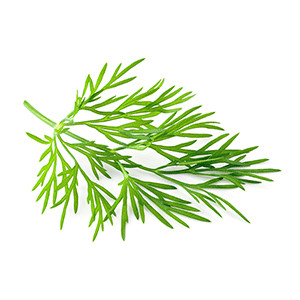
Dill
Anethum graveolens
Pflanzenfamilie
Doldenblütler (Apiaceae)
Auch bekannt als
Dillkraut, Gurkenkraut
Saisonübersicht
Voranzucht
Pflanzung
Ernte
J
F
M
A
M
J
J
A
S
O
N
D
Details


Lichtbedarf
Halbschattig

Wasserbedarf
Sehr feucht

Boden
Leicht (sandig)
Nährstoffbedarf
Niedrig

Lichtkeimer

Pflanzabstand
15 cm

Reihenabstand
25 cm

Saattiefe
0.5 cm
Anleitungen
Die Saison für diese Pflanze ist vorüber. Die folgenden Anleitungen sind für die nächste Saison.
Mitte März

Vorziehen
Ende März

pikieren
Anfang April

Abhärten
Beschreibung
Dill ist ein einjähriges, tiefwurzelndes Kraut aus der Familie der Doldenblütler mit verschiedenen Unterarten (Gartendill, Ackerdill und indischer Dill). Ätherische Öle sorgen für den intensiven Duft des beliebten Heil-und Gewürzkrauts.
Herkunft:
Südostasien
Anbautipps
Dillsamen können gesammelt und für den Wiederanbau im Folgejahr verwendet werden. Dazu kannst du sie sammeln, wenn sie sich braun färben. Dill ist ein Dunkelkeimer, seine perfekte Keimtemperatur beträgt 10°C. Zum Ernten pflückst du die Triebspitzen während des Erntezeitraums einfach ab. Dill bevorzugt einen windgeschützten Standort, da die Blattstängel leicht abknicken. Außerdem ist er empfindlich gegenüber unregelmäßiger Wasserversorgung.

Gute Nachbarn
Blattkohl (Grünkohl)
Blattkohl (Palmkohl)
Blumenkohl
Bohne (Ackerbohne)
Bohne (Buschbohne)
Bohne (Stangenbohne)
Borretsch
Brokkoli
Chili
Chinakohl
Erbse
Gurke
Kerbel
Kohlrabi
Kopfkohl (Weißkohl)
Kopfkohl (Wirsing)
Mairübe
Majoran
Möhren
Pak Choi
Paprika
Petersilie
Ringelblume
Rosenkohl
Rote Bete
Salat (Gartensalat)
Salat (Radicchio)
Schnittlauch
Spargel
Steckrübe
Zwiebel
Zwiebel (Frühlingszwiebel)

Schlechte Nachbarn
Krankheiten
Keine Krankheiten vorhanden
Schädlinge
Nematoden
Wurzelgallenälchen